
Reading the nutrition label has gotten easier
The U.S. Food and Drug Administration (FDA) has updated the Nutrition Facts label on packaged foods and drinks based on updated scientific information and new nutrition research. This is the first major update to the label in over 20 years. The label’s refreshed design and updated information will make it easier for you to make informed food choices that contribute to lifelong healthy eating habits.
1. Serving Sizes Get Real
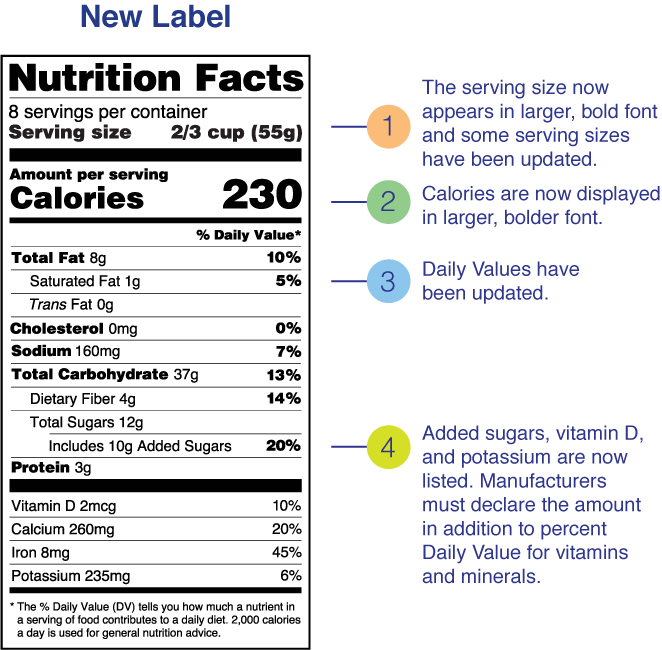
Servings per container and serving size information appear in large, bold font. Serving sizes have also been updated to better reflect the amount people typically eat and drink today. NOTE: The serving size is not a recommendation of how much to eat.
- The nutrition information listed on the Nutrition Facts label is usually based on one serving of the food; however some containers may also have information displayed per package.
- One package of food may contain more than one serving.
Learn more about serving sizes on the new Nutrition Facts label.
2. Calories Go Big
Calories are now in larger and bolder font to make the information easier to find and use.
2,000 calories a day is used as a guide for general nutrition advice. Your calorie needs may be higher or lower depending on your age, sex, height, weight, and physical activity level. Check your calorie needs.
Learn more about calories on the new Nutrition Facts label.
3. The Lows and Highs of % Daily Value
The percent Daily Value (%DV) shows how much a nutrient in a serving of food contributes to a total daily diet. Daily Values for nutrients have been updated, which may make the percent Daily Value higher or lower on the new Nutrition Facts label. As a general guide:
- 5% DV or less of a nutrient per serving is considered low.
- 20% DV or more of a nutrient per serving is considered high.
The footnote at the bottom of the label has been updated to better explain %DV.
Learn more about updated Daily Values on the new Nutrition Facts label.
4. Nutrients: The Updated List
What information is no longer required on the label?
- Calories from fat has been removed because research shows the type of fat consumed is more important than the amount.
- Vitamin A and C are no longer required on the label since deficiencies of these vitamins are rare today. These nutrients can be included on a voluntary basis.
What information was added to the label?
- Added sugars have been added to the label because consuming too much added sugars can make it hard to meet nutrient needs while staying within calorie limits. Added sugars include sugars that are added during the processing of foods (such as sucrose or dextrose), foods packaged as sweeteners (such as table sugar), sugars from syrups and honey, and sugars from concentrated fruit or vegetable juices.
- Vitamin D and potassium are now required to be listed on the label because Americans do not always get the recommended amounts. Diets higher in vitamin D and potassium can reduce the risk of osteoporosis and high blood pressure, respectively.
What vitamins and minerals stayed the same?
Calcium and iron will continue to be listed on the label because Americans do not always get the recommended amounts. Diets higher in calcium and iron can reduce the risk of osteoporosis and anemia, respectively.

Download the publication “You Had a Fracture – Now What?”
- U.S. Food and Drug Administration. What’s New with the Nutrition Facts Label. 2020.
- U.S. Food and Drug Administration. Using the Nutrition Facts Label: For Older Adults. 2020.
Posted: 2/28/2018; Revised: 12/30/20
As a service to our readers, American Bone Health provides access to our library of archived content. Please note the date of the last review on all articles. No content on this site, regardless of date, should ever be used as a substitute for direct medical advice from your doctor or other qualified clinician.
