
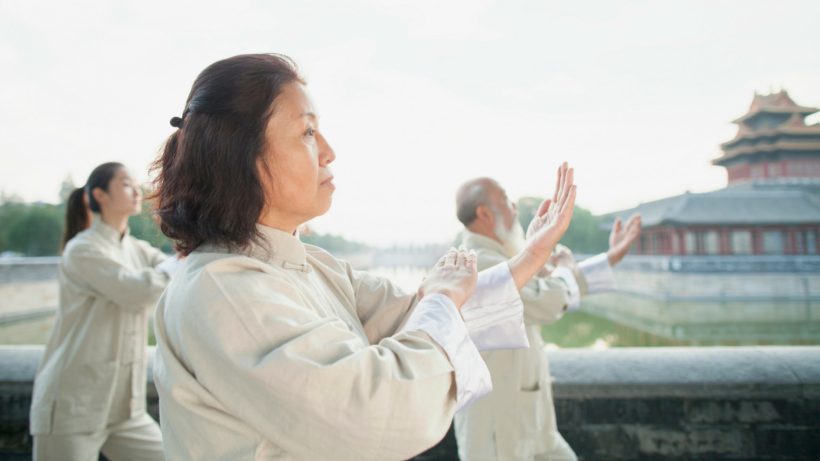
Tai chi may be an ancient practice, but Western researchers are just starting to discover how beneficial it may be in improving balance and thereby reducing falls and resulting fractures.
About Tai Chi
This Chinese form of exercise uses slow, sustained movements aimed at relaxing the body and mind. Its many health benefits include improved circulation, enhanced cardiovascular performance, lower stress level, increased strength and flexibility, and according to a study conducted in Sydney, Australia, reduced chance of repeated falls. Fall prevention is a crucial issue for adults, all around the world. Within a 12 month period, approximately 30% of older adults experience a fall.
The Central Sydney Tai Chi Trial
The 702 participants in the study were relatively healthy community-dwelling individuals between 60 and 96. Half of them took part in tai chi classes one day per week for 16 weeks, and the other half, serving as a control group, were on a waiting list for the classes. Participants were all in relatively good health and lived in communities for older adults. While earlier trials had examined the effect of tai chi on reducing falls among older adults who took classes twice a week, this study aimed to discover how much a once-a-week class could prevent falling, with the belief that it might be unrealistic to expect individuals to attend classes more often than one time per week.
Both participants in the classes and in the control group were given a falls calendar in which they were asked to record each day whether or not they had a fall, both during the 16-week class period and in the 16 weeks that followed. While little difference between the two groups was seen as far as the number of individuals who had one or more falls, participants in the tai chi classes were 50% less likely to have two or more falls—both at 16 and 24 weeks.
This conclusion held true even when accounting for age, falls history, and baseline balance. Researchers also conducted balance tests at the beginning of the study and after classes ended, and found that those who had engaged in tai chi performed much better on the balance tests.
Significant Finding
A significant finding of this study is that the benefits of tai chi on improving balance are likely to persist long after an individual completes the tai chi class. Other studies on the effects of exercise programs on balance have shown that the benefits can decline shortly after stopping the exercise. Even two months after participants completed the tai chi program, the number of falls was reduced, and earlier research on tai chi has shown these benefits continuing as much as six months after tai chi classes ceased. Researchers believe this may be true because tai chi principles are easily applicable to day-to-day movement, such as conscious placement of a foot.
Take-away
What we can take away from this study is that it does not take intensive, long-term practice of tai chi to develop improved balance and decrease your chance of falling repeatedly. Even a one-hour-a-week class taken for a few months can reduce your fall and fracture risk—and enhance your overall well-being.
Reference: Voukelatos A, Cumming RG, Lord SR, Rissel C. A randomized, controlled trial of tai chi for the prevention of falls: the Central Sydney tai chi trial. J Am Geriatr Soc. 2007 Aug;55(8):1185-91. doi: 10.1111/j.1532-5415.2007.01244.x. PMID: 17661956.
Posted: 12/5/2016; Revised: 05/17/21.
As a service to our readers, American Bone Health provides access to our library of archived content. Please note the date of the last review on all articles. No content on this site, regardless of date, should ever be used as a substitute for direct medical advice from your doctor or other qualified clinician.